
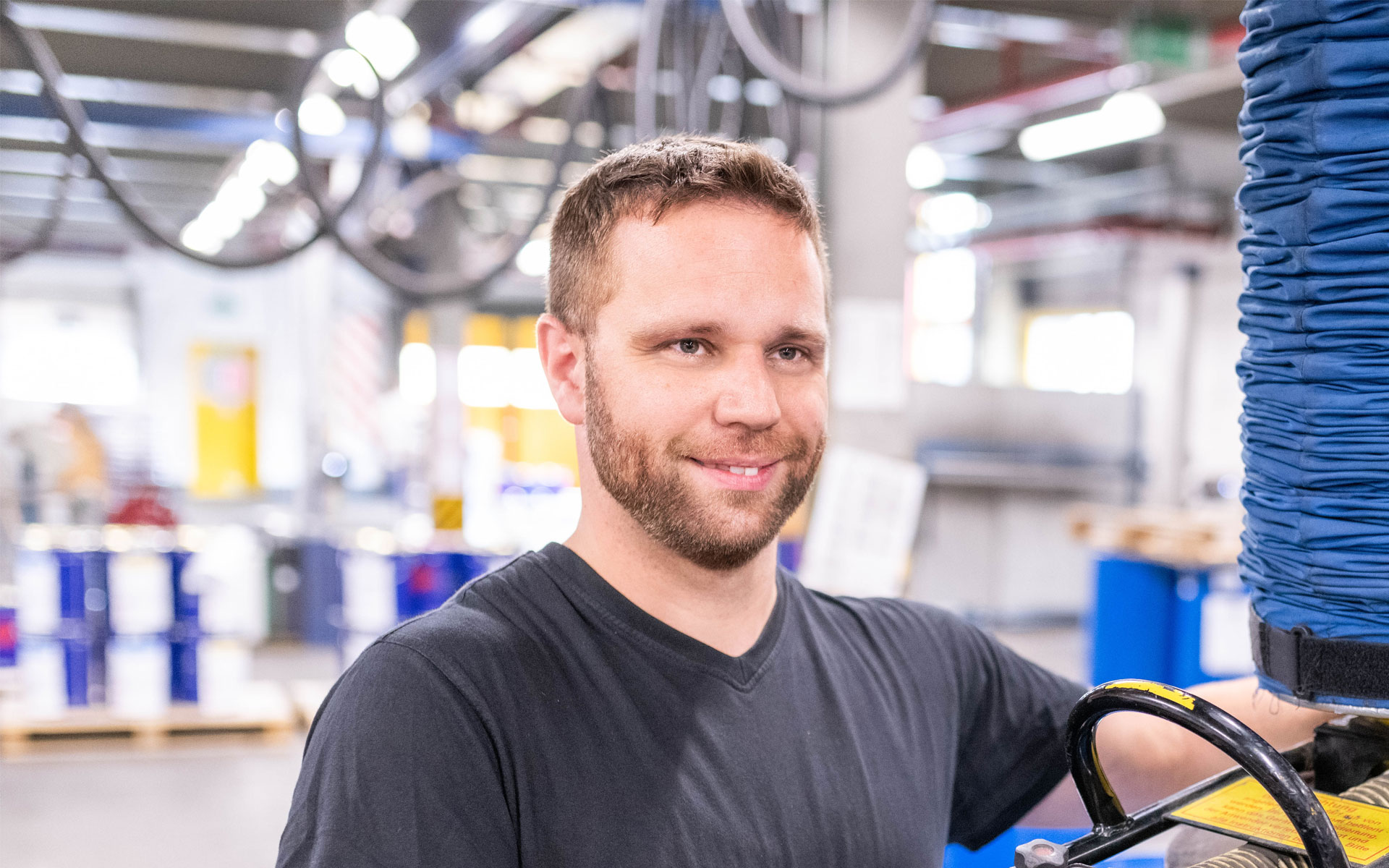
With over 250 years of experience in the world of ink, hubergroup is one of the leading international ink specialists. However, what makes us special is that as a family business we focus on your unique requirements. We work closely with your processes and reflect daily on how we can contribute to your success. For us, it’s not important that we're the biggest. We want to be the best.
Our philosophy in a few words
Get to know us
Who are we? And which principles guide our day-to-day work? By sharing our mission and company values with you, we want to show you what makes us tick.
Our mission
- We talk to our customers and work together to find solutions.
- Our family-like company culture is a real strength and shapes our ideas and actions.
- We contribute to the success of our customers because we achieve more than expected from a printing inks and chemicals manufacturer.
Our company values
Connected
“Being connected” – to us that means taking a genuine interest in our customer’s situation and being easily available for them at any time. hubergroup employees around the world work together closely to find the best possible solution for our customers. Through this international cooperation, we have also learnt to value intercultural differences and to integrate them positively into our work.
Courageous
Going one step further to develop new solutions and services is in our DNA. We act with self-confidence and make courageous but well-thought-out decisions. We push past our limits because that is the only way that we can continue to develop market innovations.
Curious & Creative
Using our creativity to create unique ideas – that defines us. It is only by taking new approaches that we are able to develop unique solutions for our customers and, at the same time, tap into new fields of business. Even if not everything works right away, we are not afraid to make mistakes, instead we look forward to finding out each time where these ideas will take us.
We are all-rounders
But in the printing sector, we are experts
Whether commercial printing, packaging printing, newspaper printing or security printing, hubergroup offers a wide variety of products and services for your pressroom. Thanks to our many years of experience and the close working relationships that we establish with our customers, we fully understand your processes and the challenges that you face on a daily basis.
We therefore focus on developing solutions and technologies that make your everyday work easier. Whether that is with an ink series such as ECO-PERFECT-DRY, which allows fast post-print processing of your printed products, with technology such as NewV cure, which makes your printed packaging even safer, or with services which simplify your operations.
The main drivers behind our new developments are above all product safety, quality and sustainability. We produce up to 90% of our raw materials ourselves. We are therefore able to define our own quality and environmental standards and our chemical experts are always on hand to assist you when you need them – because we are not just a printing ink manufacturer, we are a partner that shares their knowledge with you.
Leading you to success
Do you know who runs hubergroup?

Britta Hübner
Chief Financial Officer (CFO) & Chief Transformation Officer (CTO)
Britta Hübner joined the management of MHM Holding GmbH in March 2021. In her role as CTO, she is responsible for the transformation process of the corporate group as well as the treasury division. As CFO, she also manages the Accounting, Controlling, Reporting Taxes and Legal departments. Britta Hübner has already accompanied many international company groups in transformation processes.
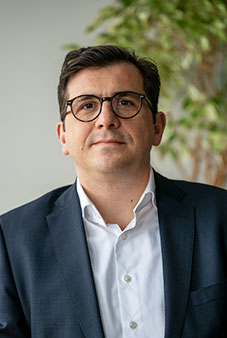
Taner Bicer
President Chemicals Division
Taner Bicer has been a member of the hubergroup management board since 1st January 2018 and is now heading up the chemicals division. A chemical engineer, Taner Bicer joined hubergroup in 2014 and already has several years of experience in charge of technology management for the company. Taner Bicer has worked for over 20 years in the coating and printing inks industry.
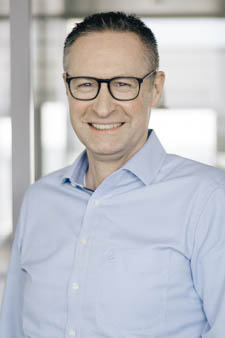
Carsten Zölzer
President Division Offset & President Central & West Europe
As President Division Offset & President Central & West Europe, Carsten Zölzer is responsible for the global offset business of hubergroup as well as all business activities in Central and Western Europe. He also heads Supply Chain Excellence. The graduate engineer has been with hubergroup since 2004 and has held various positions during this time. In his leisure time, Carsten Zölzer can be found mountain biking or hiking in the mountains.
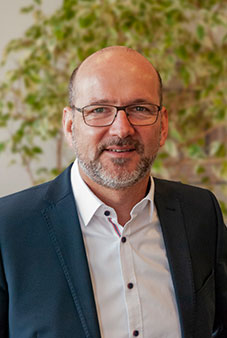
Dr Dirk Aulbert
President Division Flexo/Gravure & President South & East Europe
Dr Dirk Aulbert has been the head of the RBU for Europe since 1st January 2018 and also assumed the role of RBU manager for America on 1st January 2020. Before joining hubergroup in 2017, he held various regional and global management positions within the printing inks industry. His work took him to England and Spain and other countries. He has a doctorate in chemistry and is a father of three.
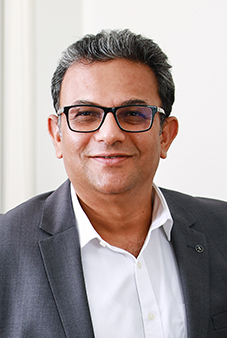
Suresh Kalra
President Asia
Suresh Kalra joined hubergroup as Executive Director in September 2021 and has been the Head of Regional Business Unit Asia and Managing Director of hubergroup India since 1 January 2022. Previously, he worked in regional, Asia Pacific and Global roles and has served on several boards during his tenure. Suresh Kalra is a Mechanical Engineer with an MBA and loves adventure sports. He holds an advanced open water diving license and had dived at various sites around the world.
255 years full of innovations
There’s too much to mention, isn’t there?
Since the early days of hubergroup in 1765, having the courage to try something new has played an important role in the company. Mathias Mittermayr, a trained mason, decided at that time to forge a new path in ink production. On 29th November 1765, he registered his first patent for the production of the natural inks Vienna Varnish (a rich reddish-yellow colour), Prussian Blue, Carmine Red and the yellow colour of the Munich coat of arms, which he had permission to sell in Germany and abroad. So it was, in Haidhausen a district in Munich, that he laid the foundations for today’s hubergroup.
Since then, of course, a lot has changed: in 1780, Mittermayr’s son-in-law Georg Huber took over the company and successfully expanded the business before he passed it over to his son Michael Huber (l.) in 1815. Led by Michael Huber, the company eventually became the first German printing ink manufacturer. Huber recognised the future relevance of printing inks early on thanks to his close association with Alois Senefelder, the inventor of lithography (stone printing). In the following years, the company, known as Michael Huber München, went on to become internationally renowned.
The subsequent Huber generations also worked passionately to expand their ink business: with new production sites, a continually expanding range and constantly improving manufacturing techniques, Michael Huber München continued to grow. The company even recovered quickly from the decline in production during the two world wars: it built up the production facilities once again and at this point specialised fully in printing inks. The company premises in Haidhausen soon became too small and the headquarters were relocated to Kirchheim-Heimstetten in 1965.
In the 1990s and 2000s, the company achieved success in the international printing inks market with new sites in Europe, South America and Asia. One important milestone was the acquisition of Micro Inks Limited in 2006, because up to this day this enables us to produce a large percentage of the raw materials for our printing inks ourselves. With innovations such as low migration printing inks as well as mineral oil-free and cobalt-free printing inks the company – now called hubergroup – set the environmental standards early on and has therefore become a trendsetter within the printing industry.
Today hubergroup is one of the leading international specialists for solutions and technologies relating to printing inks, printing aid and raw materials. A contributing factor to this success is having the courage to forge new paths, this plays an important role in our daily work even after more than 250 years. This is the only way that we can continue to develop innovative solutions and technologies for the printing and packaging industry, the paint and coating industry and for chemical companies.
2020: hubergroup set up a diversification of its business. We have launched a separate Chemicals Division
hubergroup adapts the whole production of sheet-fed offset inks in line with GMP standards
hubergroup becomes the first international printing inks manufacturer to become C2C certified and makes sustainability an industry standard
hubergroup is the first printing inks manufacturer to set the standard and make cobalt-free printing inks.
All the companies are brought together under the brand name hubergroup
By introducing the 10-point MGA guarantee, hubergroup set a new safety standard for printing inks used for food packaging.
The acquisition of Micro Inks Limited enables backward integration: hubergroup now produces a large percentage of the raw materials itself.
Fountain solution concentrates for VOC-free printing are introduced to the market under the names REDUFIX and SUBSTIFIX
MGA inks are introduced to the market
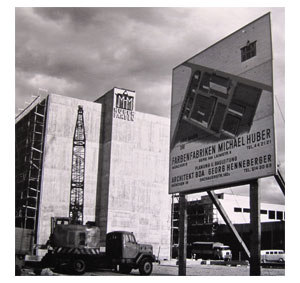
The headquarters are relocated to Kirchheim/Heimstetten
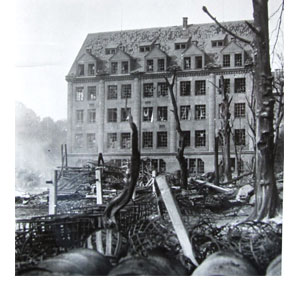
The production facilities are rebuilt after the Second World War and Michael Huber München focuses on specialising solely as a printing inks manufacturer.
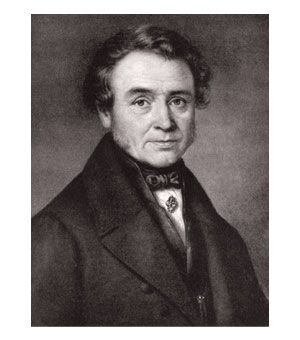
Under Michael Huber (I.) the production of printing inks is expanded
Georg Huber takes over and successfully grows the company.
Mathias Mittermayr is granted permission by the electoral court to produce and sell inks